
Big Changes to New York Auto Liability Law

New York Governor Kathy Hochul has signed a new law, effective May 26, 2026 (Assembly Bill A10008C), which enacts significant changes to New York’s auto liability law. The law is applicable to all actions and proceedings commenced on or after the date the bill was signed.

Here are the three most significant changes.

  • The second prong of the serious injury threshold which allowed a party to sue for a non-permanent injury resulting in the inability to perform the usual and customary activities for 90 out of the first 180 days following an accident has been eliminated.
  • New York’s pure comparative law has been replaced by a 50-percent rule. If a plaintiff’s culpable conduct is greater than the culpable conduct of the defendant, or of all defendants combined if there are multiple defendants, plaintiff cannot recover. Thus, New York joins New Jersey and many other modified comparative negligence states.
  • A cap of $100,000 has now been placed on recovery of non-economic damages (other than in an action for damages for injuries resulting in death) where the  injured party is at fault and was (1) operating an uninsured motor vehicle he or she was responsible for insuring (unless the lapse was less than thirty days); (2) operating a motor vehicle while impaired and convicted of such; or (3) operating a motor vehicle in the commission of a felony, or immediate flight therefrom, at the time of the accident and has been convicted of such.  

The law also contains the following provision: 

No liability for non-economic loss shall be fixed unless and until the trier of fact has determined the existence of a serious injury. In any action to recover non-economic loss pursuant to this article, the trier of fact shall not determine the question of whether an injury is a serious injury until the trier of fact has determined the party or parties at fault.

This provision is significant because interest on judgment will not accrue until there is a finding of both fault and a serious injury.  This may also make moving for summary judgment on the serious injury threshold more challenging, with differing interpretations by the courts likely.
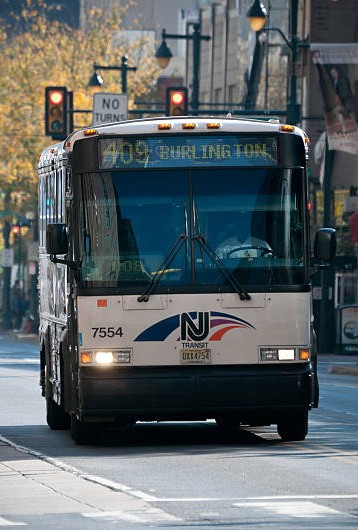
Supreme Court Rules New Jersey Transit Lacks Sovereign Immunity

New Jersey Transit Corporation is a creation of the State of New Jersey. It operates bus and computer train services in New Jersey, New York, and Pennsylvania. When it is sued for personal injuries arising out of accidents, will NJ Transit have sovereign immunity as an arm of the State of New Jersey? That was the question before the Supreme Court of the United States, which held unanimously that NJ Transit is not an “arm of the State” and thus does not come under the umbrella of sovereign immunity. The case is Galette v. New Jersey Transit Corporation. But why is this issue before the Supreme Court?

That’s because the sovereign immunity of the several States is rooted in the Constitution. In a long line of Supreme Court decisions interpreting the immunity doctrine the Court has held that sovereign immunity is a right bestowed upon the States by the Constitution. It is personal to the State and is not shared by counties, municipalities, school boards, or even a bank created by the State. The issue is whether the state-created agency is so tied to the State, by control, finances, or other factors as to be considered an “arm of the State.” NJ Transit is not.

Two distinct lawsuits against NJ Transit reached the Supreme Court. Jeffrey Colt was injured when he was struck by a bus in midtown Manhattan. Cedric Galette was injured in Philadelphia when an NJ Transit bus crashed into a car in which he was a passenger. Both men sued NJ Transit in state courts in New York and Pennsylvania, respectively. NJ Transit pleaded that it is an “arm of the-state” and thus entitled to New Jersey’s sovereign immunity.

The New York Court of Appeals disagreed and ruled that Mr. Colt was free to pursue his tort action in the New York courts. The Supreme Court of Pennsylvania held the opposite, ruling that Mr. Galette’s suit was barred by New Jersey’s sovereign immunity because, it concluded, NJ Transit is an arm of the State. The constitutional issue, and the divide between New York and Pennsylvania’s highest courts brought the cases to the Supreme Court, where they were heard together. The Court undertook a thorough review of its legal precedents and the principles espoused, to analyze the relationship between the State and the New Jersey Transit Corporation.

NJ Transit is a “body corporate and politic with corporate succession.” It can sue and be sued, enter into contracts, acquire real or personal property, and make and alter bylaws. It can raise funds, establish its own operating divisions, adopt and maintain its own employee benefit programs, and even own or control any corporate entity that it acquires or forms to carry out its statutory objectives. Its organic statute labels NJ Transit as an “instrumentality of the State,” but that label lacks historical weight. Not all instrumentalities of a state may invoke sovereign immunity. Other New Jersey statutes dictate that a state entity that can sue and be sued is not “part of the State.” By law, NJ Transit is independent of any control by the State department of transportation. Moreover, the State of New Jersey is not liable for its debts.

Most important to the Court is that a state-created corporation that is formally liable for its own judgments is not an arm of the State. “NJ Transit is not an arm of New Jersey and thus is not entitled to share in New Jersey’s interstate sovereign immunity.”