Third Circuit Goes Easy on Attorney AI Misuse

ca3.uscourts.gov

A recent Third Circuit decision underscores a growing risk for practitioners: relying on AI-generated research without verification can damage both a case and counsel’s credibility.

In McCarthy v. DEA, a Pennsylvania attorney submitted a brief relying on AI-generated summaries of eight DEA adjudications to argue the agency had acted inconsistently. The summaries—provided by a non-attorney—were incorporated without reviewing the underlying decisions. Seven were “riddled with factual and legal inaccuracies.” The eighth did not exist.

Although the attorney later acknowledged the issue, he initially characterized the errors as “minor discrepancies” and did not verify the cited authorities until ordered to do so by the Court. His reply brief introduced additional inaccuracies.

The Third Circuit found multiple violations of Pennsylvania ethical standards, noting that the attorney wasted the resources of both the Court and the DEA and harmed his own credibility. Still, the majority stopped short of imposing monetary sanctions. Citing his belated corrections and “sincere contrition,” the Court issued only a reprimand, observing that it had not yet clearly articulated expectations regarding AI use.

A strong dissent urged that the egregious conduct of the attorney was more than a mere mistake. The dissent cited myriad cases across the country, including Park v. Kim, wherein the Second Circuit emphasized that a rule about artificial intelligence use “is not necessary to inform a licensed attorney … that she must ensure that her submissions to the Court are accurate.” The client’s case was dismissed for numerous violations of Federal Rule 11, and the attorney was referred to the Court’s Grievance Panel.

Agreeing with the Second Circuit in Kim, the dissent in McCarthy concluded with

But punishing an attorney for failure to verify information obtained from AI is consistent with the standard to which attorneys historically have been held. No forewarning is necessary when it is clear what standard the attorney was required to follow. The ethical practice of the law is innate in the responsibilities of each practicing attorney. It needs no reminder as each case is accepted and resolved. The takeaway is straightforward: courts may differ on sanctions, but not on the underlying duty. Verification is not optional.

The takeaway is straightforward: courts may differ on sanctions, but not on the underlying duty. Verification is not optional.

And while McCarthy reflects restraint, most courts considering similar conduct have not been as forgiving—a trend that is likely to continue.
“Removal to Federal Court Changes the Field of Play, but not the Game Being Played.”

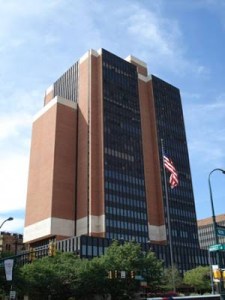
James A. Byrne U.S. Courthouse
Philadelphia, PA

With those words the Third Circuit rules that removal to federal court does not cure jurisdictional defects or waive any other defenses available in state court. Danziger & DeLlamo, LLP v. Morgan Verkamp, LLP, (January 15, 2020) is a battle between two law firms over a purported referral fee worth millions of dollars. Morgan Verkamp, an Ohio firm, succeeded in a qui tam action in Pennsylvania federal court. Danziger, a Texas law firm, says it referred the case to Morgan, for an orally agreed referral fee made by telephone between Texas and Ohio.

In a qui tam action a party, called a relator, pursues a claim on behalf of a government, which is deemed the real party in interest. If the government succeeds, the relator receives a share of the award. In this case, Morgan brought the case under the federal False Claims Act, and the U.S. government received a settlement for hundreds of millions of dollars; Morgan received several million dollars in attorneys’ fees. Danziger wants a share of those fees.

The two firms spent a year and a half conducting discovery in a procedure permitted by Pennsylvania state court rules before the filing of a complaint. When Danziger finally filed its complaint, Morgan Verkamp promptly removed the lawsuit to federal court and moved to dismiss, arguing that it was immune from personal jurisdiction in Pennsylvania. The district court agreed and dismissed the complaint. Danziger appealed, arguing that Morgan consented to personal jurisdiction by removing the case to federal court.

The Third Circuit disagreed:

We now adopt this rule.  On removal, a defendant brings its defenses with it to federal court. * * * Removal does not cure jurisdictional defects, so defendants can still challenge jurisdiction after removal.

The Third Circuit, which includes New Jersey, now joins the First, Second, and Eighth Circuits. “[T]he federal court takes up where the state court left off.” Nationwide Eng’g & Control Sys., Inc. v. Thomas (8th Cir. 1988). The governing case in the Second Circuit, which includes New York, is Cantor Fitzgerald, L.P. v. Peaslee (2nd Cir. 1996) (“Removal does not waive any Rule 12(b) defenses.”). Cantor continues to be cited by the New York federal courts.

We routinely remove cases to federal court in New York and New Jersey, with the confidence that our clients’ defenses to personal jurisdiction will remain intact in the federal forum.